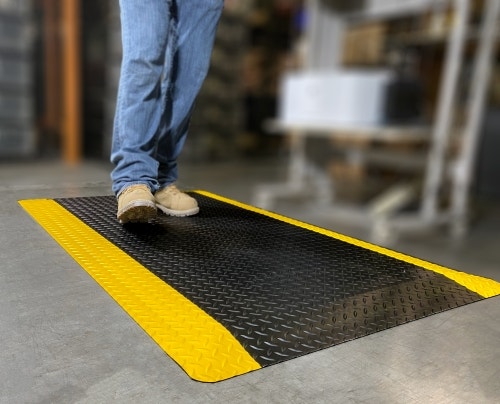
It’s 5 am somewhere... The alarm goes off, and an industrial athlete wakes to start another day of work. They are one of millions of standing workers in the US. As they sit up- a rush of pain. Feet, legs, and back, all on fire. These are the unseen effects of long term standing work.
So what do they do? They lay back down and pick up the phone ... “I won’t be coming into work today”.
Anti-fatigue mats can have a profound impact on worker health. While they do reduce fatigue, they also promote a variety of ergonomic health benefits that go mostly unseen. Unfortunately, the only way to “see” these benefits, is to observe non-ergonomic conditions over a long period of time. Over time, the slow and eroding effects of concrete begin to rear their ugly head. Here are some of the major compounding health concerns that proper anti-fatigue matting will help to prevent:
1. Reduce Varicose Veins
There are real, visible effects that develop from long-term standing. Varicose veins are veins that have become enlarged and twisted. Prolonged standing on hard surfaces can cause blood valves to weaken and eventually fail, allowing the blood to flow backward. The veins then expand to accommodate. Varicose veins have been associated with chronic heart/circulatory disorders and hypertension as well. When standing on anti-fatigue matting versus concrete, Wearwell has measured that workers will ‘rock’ from side to side throughout the day. This minimal ‘rocking’ allows the leg muscles to expand and contract, aiding blood valves, and preventing the lead up to varicose veins (in comparison with concrete.)
2. Prevent Poor Blood Flow
Other effects of long-term standing may not be quite as visible. People with underlying circulatory conditions can see these conditions worsen over time when working only on concrete. While matting cannot prevent these from developing, they can aid blood flow in comparison to concrete. “Muscle pump theory” has measured that workers move their legs and body more throughout the day when standing on matting (versus when standing on concrete.) These small, daily blood flow impacts can have a large and even compounding effect over long periods of time. Matting may prevent much of the negative compounding effects of concrete on the circulatory system.
3. Ease Joint Compression
Joint compression is related to long-term standing. Significant pressure on the hips, knees, ankles and feet reduces the normal cushioning. Plantar Fasciitis, for example, is a strained ligament that gets weak and swollen, causing the bottom of your foot to hurt when you stand or walk. The right anti-fatigue matting will be supportive enough for your workers, and will have some preventative effects when it comes to damaging joint compression.
4. Reduce Musculoskeletal Disorders
MSD’s (Musculoskeletal Disorders) are extremely common in the industrial sector. The Occupational Safety and Health Administration has stated that muscle fatigue and musculoskeletal disorders account for "33% of all worker injury and illness". MSDs are often painful and disabling. They can require months or even years of treatment, and in severe cases, can be permanently disabling. For the most part, MSD’s cause absenteeism and lost production in the workplace. The right matting can help with small, positive impacts over a long period of time. We have a few other tips as well:
- Stay conscious of your working position
- If feasible, change body positions frequently
- Floor and footwear should ensure adequate arch and heel support
If you are the employer of industrial athletes, look down. What type of floors are your workers standing on? Hard, inflexible concrete is the worst surface for standing workers. The use of anti-fatigue mats may not eliminate all of your problems, but combine with proper work design, it will improve the working conditions. Wearwell mats reduce fatigue, promote wellness, and improve safety by reducing slips and falls!
We can help you identify the best flooring for your workplace through our FREE SITE SURVEY program.